Generated Title: NEAR Protocol's Intent Layer: $4 Billion Hype or Sustainable Growth?
NEAR Protocol is making headlines again, this time for its Intent layer's surging transaction volume. The claim? Approaching $4 billion in trading volume signals increased adoption and a potential rally for the NEAR token. But let's dissect the numbers before we uncork the champagne.
Intent Volume: Digging into the Details
The NEAR Protocol's Intent layer, designed to automate on-chain swaps, boasts a total trading volume of $3.89 billion. Impressive, sure. But context is crucial. Two peak volume days this week—Tuesday and Thursday—accounted for a significant chunk, $200 million and $155 million respectively. A spike doesn't necessarily equal a trend. Were these organic transactions, or the result of concentrated whale activity skewing the data? (The data source, Dune Analytics, doesn't readily offer a breakdown of transaction size.)
Furthermore, Bitcoin and Zcash dominate the volume, alongside stablecoins. While cross-chain operability is a plus, the demand for NEAR itself is "limited...to transactions settled with the native token." This is a key point. A high volume of BTC and ZEC swaps doesn't automatically translate to a surge in NEAR demand. It's like measuring the health of a toll road by counting all vehicles, regardless of whether they paid with cash or a pre-paid pass.
The protocol upgrade vote is also a major factor that could influence the price of NEAR. Validators are voting on a proposal that will see the blockchain halve network rewards, that is, inflation by -50% from +5% to +2.5%. This is a controversial vote with some validators urging others not to vote or upgrade. This governance issue could undermine the integrity of the protocol. Will NEAR Protocol Survive After This Crucial Vote?
Market Signals: A Grain of Salt
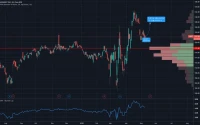
The NEAR token did experience a 10% price increase recently, breaking out of a short-term descending channel. Open Interest (OI) in NEAR futures jumped 65% in 24 hours, reaching $333.48 million. This suggests increased risk exposure among traders. The OI-weighted funding rates are negative (-0.0648%), meaning shorts are paying a premium, potentially incentivizing further bullish activity.
However, derivatives data needs to be viewed with caution. A large OI can amplify price swings in either direction. And funding rates can be a lagging indicator, reflecting current sentiment rather than predicting future moves. The technical indicators are showing a rise in buying pressure, but these indicators are not always correct.
The article mentions a potential upside target of $2.380 (the 50-day EMA), then $2.446 (the 50% Fibonacci retracement level). These are levels to watch, certainly. But technical analysis is more art than science.
Let's not forget the broader context. NEAR is down -52% year-to-date, and nearly -30% in the last month alone. The market cap is $2.7 billion (as of late October 2025). A 10% bump and positive derivatives data offer a glimmer of hope, but they don't erase the preceding downturn.
Community Sentiment: A Vocal Minority?
The original article cites opposition to the proposed halving of network rewards, with some validators expressing concerns about governance. One validator, Chorus One, is quoted urging others not to vote or upgrade. This is presented as a "serious governance issue."
But how widespread is this sentiment? It's impossible to quantify precisely. However, the article also quotes a counter-argument: that validators are conflicted voters driven by self-interest. This highlights a crucial point: online discussions often amplify the voices of a vocal minority, not the silent majority.
I've looked at hundreds of these sentiment analyses, and this particular case is interesting. It could be a serious governance issue, or it could be a case of validators not wanting to make less money.
Is This Really "Adoption," or Just Clever Marketing?
NEAR Protocol's Intent layer is generating significant transaction volume. But before we declare it a resounding success, we need to ask tougher questions. How much of this volume directly benefits the NEAR token? How sustainable is this growth, given the concentration of trading in a few assets? And how representative is the community sentiment being portrayed online? The numbers tell a story, but it's up to us to read between the lines.
The Data Isn't Quite Convincing
The growth is there, but the numbers aren't convincing enough to say it's sustainable.