Generated Title: Walmart's Nasdaq Gamble: A Tech-Fueled Mirage or a Calculated Bet?
Walmart's move to Nasdaq, slated for December 2025, is being spun as a tech-forward evolution. The official line is that it "aligns with the people-led, tech-powered approach to our long-term strategy." But let's dissect this claim. Is it a genuine reflection of Walmart's trajectory, or just clever PR gloss?
The Allure of Nasdaq: More Than Just a Listing
The shift from the NYSE to Nasdaq isn't just a change of venue; it's a statement. Nasdaq is perceived as the exchange for tech companies, even if that perception is somewhat outdated. (Remember when everyone thought dot-coms would rule the world?) For Walmart, a company built on logistics, real estate, and squeezing supplier margins, associating itself with "innovation" carries significant weight with investors.
Walmart's CFO, John David Rainey, talks about "integrating automation and AI." Okay, but what does that actually mean in terms of ROI? Are we talking about marginal efficiency gains in distribution centers, or a fundamental reshaping of their business model? The press release offers no specifics. This lack of concrete detail is a red flag. According to Walmart's official press release, this move is intended to highlight their commitment to technology. Walmart to Transfer Stock Exchange Listing to Nasdaq
The claim that this move will enable associates to "deliver even greater value at scale" also raises eyebrows. How exactly does a stock exchange listing translate to better service at the checkout line? Are we supposed to believe that customers will suddenly find shorter lines and friendlier faces just because Walmart's ticker symbol is on a different screen?
Earnings vs. Hype: The Market's Reality Check
The market's reaction to news like this is often short-sighted. As Nancy Tengler of Laffer Tengler Investments points out, "stocks ultimately trade on earnings." The initial pop in WMT stock price, if any, will be fleeting if the underlying financial performance doesn't justify the tech narrative.
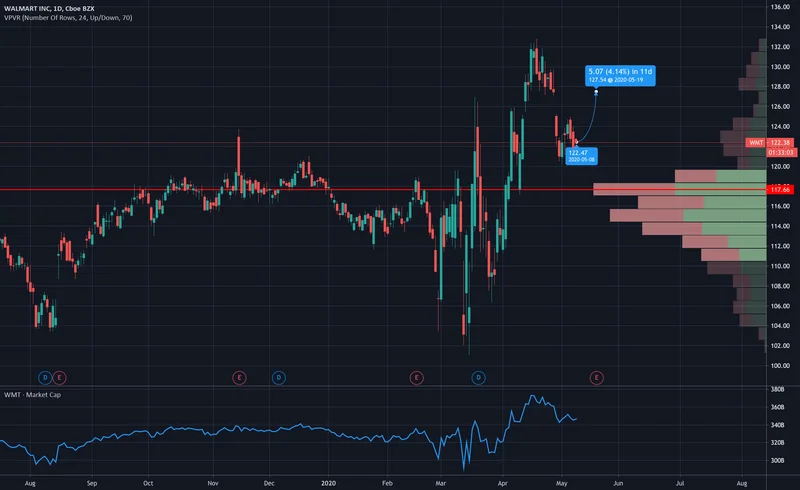
And this is the part of the report that I find genuinely puzzling. Walmart's a behemoth, with fiscal year 2025 revenue of $681 billion. Shifting to Nasdaq won’t magically transform them into a high-growth tech darling. It’s still a brick-and-mortar giant, albeit one with a growing e-commerce presence.
Consider Nvidia's recent earnings, which were undeniably stellar. Analysts are tripping over themselves to declare that it proves there is no AI bubble. But Nvidia is an AI company, through and through. Walmart... isn't. The correlation between Nvidia's success and Walmart's stock listing is tenuous at best. Stocks making the biggest moves premarket: Nvidia, Walmart, Palo Alto Networks & more
The delayed jobs report, showing 119,000 jobs added in September, further complicates the picture. The initial market rally quickly fizzled out as investors realized the data wasn't as rosy as it seemed (revised job gains for July and August were down by 33,000). This volatility highlights the market's sensitivity to economic uncertainty, and Walmart's Nasdaq move won't shield it from these broader macroeconomic forces.
The issue, as Bret Kenwell at eToro notes, is that "markets don’t like uncertainty." A new stock exchange listing doesn’t eliminate uncertainty about interest rates, labor markets, or government policy.
So, Is This Just Window Dressing?
Walmart's transfer to Nasdaq is a calculated PR move designed to burnish its image as a modern, tech-savvy retailer. Whether it translates to real, sustainable value for shareholders remains to be seen. I’d be far more interested to see detailed breakdowns of their automation investments and their actual impacts on core operational metrics. Until then, this move strikes me as more about perception than reality.