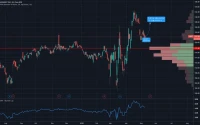
The whispers started as a trickle, then became a roar. "Bitcoin price crash!" the headlines screamed, practically vibrating with schadenfreude. And yes, for many, the past few weeks have felt like a stomach-lurching plunge into the unknown, a dizzying reversal from those exhilarating highs less than two months ago. Bitcoin news has been dominated by the red, the world’s biggest cryptocurrency now a full 33% off its peak. Ouch. For anyone holding bitcoin or tracking the crypto market news today, it’s a tough pill to swallow. But what if I told you that this isn't just a simple setback, but a crucial, perhaps even necessary, recalibration for the entire ecosystem? What if this moment, this very crypto news today, is actually a sign of something profoundly more resilient emerging?
The Saylor Strategy: A Case Study in Unchecked Enthusiasm
Let's zoom in on the elephant in the room, or rather, the whale: Michael Saylor's Strategy. Now, I’ve long admired Saylor’s conviction, his almost evangelical zeal for bitcoin. He saw the future, and he went all-in, accumulating nearly 650,000 BTC – that’s a staggering 3% of the total supply! A true pioneer, right? His vision was simple: use a business intelligence firm to essentially become a bitcoin treasury company. Brilliant in theory, especially when bitcoin price was climbing like a rocket. But here's where the rubber meets the road, where even the most visionary strategies face the cold, hard realities of market dynamics.
The facts are stark: Strategy’s average cost per bitcoin is now $74,433. We're perilously close to that tipping point, a mere 11% further drop away from paper losses. And while Saylor famously weathered the last bear market without selling a single coin, his holdings then were a mere fraction of what they are today. This isn't just about bitcoin news; it’s about a company whose market capitalization is now less than the value of the bitcoin it owns. Think about that for a second. Its stock, MSTR, has plummeted by 56% in six months, 41% of that in just the last month. Wall Street, ever the pragmatist, is dumping shares faster than you can say "decentralized finance."
This, my friends, is the kind of moment that reminds me why I got into this field in the first place – not for the easy wins, but for the profound lessons. We’re witnessing a fascinating, if painful, stress test of a highly concentrated, debt-fueled bitcoin strategy. JPMorgan has already pointed out the risk of Strategy being delisted from major indices like the Nasdaq 100, potentially triggering billions in outflows. Then there are those $5 billion in convertible bonds due in 2028, a veritable iceberg on the horizon. S&P slapping a junk-grade B-minus rating on Strategy isn't just a financial footnote; it’s a blaring siren, warning about "high bitcoin concentration, narrow business focus, weak risk-adjusted capitalization, and low U.S. dollar liquidity." Saylor’s mantra of "never sell your bitcoin" suddenly feels less like a rallying cry and more like a desperate whisper against a hurricane.

What does this all mean for the broader narrative? Shanaka Anslem Perera, an astute analyst, put it perfectly when he said the "reflexivity loop" – raise money, buy bitcoin, stock goes up, raise more, buy more – "is dead." And you know what? He’s absolutely right. And that, in my optimistic view, is a good thing.
Beyond the Turbulence: What We're Really Building
Here's my big idea, my core thesis: this isn't the death of bitcoin or the crypto markets news. It's the necessary evolution of how the world interacts with this groundbreaking technology. Imagine, if you will, the early days of the internet. We had companies that made grand pronouncements, burned through cash, and ultimately flamed out. Pets.com, anyone? Were they a sign that the internet was a fad? Absolutely not! They were a sign that we were still learning how to build sustainable businesses on this new frontier, figuring out the right models, the prudent approaches.
This Strategy situation is our Pets.com moment for corporate bitcoin treasury. It’s a painful, public lesson in leverage and concentration. It teaches us that while bitcoin is a revolutionary asset, the strategies for integrating it into traditional finance need maturity, diversification, and a healthy respect for risk management. We can't just throw bitcoin at every problem and expect magic. The underlying technology, the decentralized network, the immutable ledger—that’s the real breakthrough, the paradigm shift. It's like comparing the fundamental physics of flight to a single, poorly designed airplane. One's a foundational truth, the other's a specific application.
The community, the true believers who’ve been through these cycles before, they get it. They understand that these shake-outs, while brutal in the short term, cleanse the system. They remove the speculative froth, the overly ambitious, and the financially unsound. It clears the path for more robust, more carefully considered integrations. We're seeing the rise of crypto ETF news and other regulated products, offering investors indirect exposure to bitcoin without the specific corporate risks of a single company’s highly leveraged balance sheet. This isn't a retreat; it's a strategic advance toward broader, more stable adoption. When I picture the future, I see institutions learning from these hard-won lessons, approaching bitcoin not as a speculative gambit but as a foundational element, integrated with the wisdom born from moments like this. This isn't about one man's strategy failing; it's about the entire ecosystem growing up, shedding its adolescent skin, and preparing for a truly adult role in the global economy. What kind of future are you imagining, now that the dust is settling on this particular experiment?
The Crucible of Innovation Refines the Future
The current turbulence around Strategy and the bitcoin price isn't a death knell for the bitcoin narrative; it's a crucible. It’s where the dross is burned away, and the true, resilient metal of innovation is revealed. We’re not watching an ending, but a profound transformation. This experience, as jarring as it feels right now, is actually strengthening the foundation for bitcoin’s long-term, sustainable role in the world.