The FIRO Conundrum: Two Worlds, One Acronym
Let's get something straight right off the bat, because in the current information climate, clarity is a premium commodity. When you hear "FIRO" these days, your brain might be toggling between two wildly different concepts. On one hand, you have the burgeoning world of decentralized finance, where FIRO is a privacy coin that just saw its value nearly double. On the other, you have a critical infrastructure project in California, where FIRO stands for "Forecast-Informed Reservoir Operations," a new protocol designed to manage water resources more efficiently. While both aim for optimization, their underlying mechanics, risk profiles, and tangible impacts couldn't be further apart.
My focus, as always, is where the numbers whisper — or, in the case of digital assets, sometimes scream. So, let's dissect the crypto FIRO, because despite its recent eye- popping performance, the data suggests a familiar pattern of enthusiasm meeting market resistance.
Decoding the Crypto Surge: Utility vs. Speculation
The recent run for FIRO, the privacy coin, has been nothing short of spectacular. We're talking about a surge of roughly 120% — to be more exact, 119.2% — in a mere two weeks. It shot up to $3.11 before pulling back slightly to the $2.82 mark. Impressive, no doubt. The narrative driving this momentum points directly to the early November launch of its "Spark Assets" feature. This isn't just another incremental update; it's a structural shift, transforming FIRO from a standalone privacy coin into what its proponents call a "privacy infrastructure layer."
The idea is compelling: developers can now mint privacy-first tokens (think stablecoins, NFTs) that share a single anonymity pool. Crucially, every asset creation or private transaction requires FIRO tokens. This, in theory, creates real utility and demand. Early post-launch metrics seem to support this, showing a rise in daily active addresses and increased transaction volumes. The network's market cap currently hovers around $50.69 million, with about 17.9 million tokens in circulation.
But this is where, frankly, I start to raise an eyebrow. While the concept of embedded utility is sound, we've seen countless projects launch with similar promises. The real question isn't just whether the tech works, but whether it translates into sustained, organic adoption that justifies these kinds of price movements. Is the market truly valuing a fundamental shift, or is it merely riding the "privacy coins hype" wave, as FIRO price hits a snag after rising nearly 120%: here’s what to watch out for suggests?
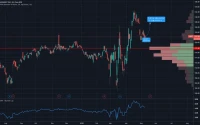
The data here presents a classic technical test. FIRO is bumping hard against the $3 resistance level, a ceiling that has consistently capped rallies since mid-2022. While momentum indicators like the daily RSI are still bullish (though flirting with "oversold" territory), and the MACD histogram remains positive, we're also seeing bearish divergence on the daily chart. This isn't just noise; it’s a flashing yellow light for profit-taking. A failed breakout could send FIRO tumbling back into the $1.47–$1.84 range. Conversely, a decisive weekly close above $3 could propel it toward $4.80. This isn't a prediction; it’s a binary outcome driven by market psychology as much as underlying fundamentals.
And let's not gloss over the external factors. The regulatory landscape for privacy coins is, to put it mildly, a minefield. Past delistings from major exchanges have demonstrably dented liquidity, leaving investors holding the bag. And then there’s the upcoming mandatory software update (v0.14.15.0) before the November 19th hard fork. While it brings improvements like Spark Name transfers and lower GPU VRAM requirements, any mandatory upgrade introduces a point of friction, a potential for user drop-off if not managed perfectly. It's a bit like upgrading a car engine while it's still racing down the highway; the benefits are clear, but the execution needs to be flawless.
Ultimately, the long-term viability of crypto FIRO hinges on whether Spark Assets can genuinely attract significant cross-chain activity through partners like Confidential Layer. Without that sustained, utility-led demand, the current surge looks less like a foundation and more like a speculative bounce. Compare this to the other FIRO, the one managing Lake Mendocino's water supply. There, the data is concrete: 11,650 acre-feet of additional storage, a 19% increase in water storage during a dry year (2020), and a 66-year-old water control manual finally updated based on verifiable atmospheric river forecasting. That's a clear, measurable win, as demonstrated by the New forecast-informed decision-making tool implemented at Coyote Valley Dam and Lake Mendocino. For the crypto FIRO, we're still largely watching for the proof.